The Most Common Driver Mistakes When Using Wheels and Tires
Wheels and tires are parts of a vehicle that directly affect safety, driving comfort, and the overall appearance of the car. Unfortunately, many drivers make basic mistakes during everyday use, which leads to faster wear, deformation, or even cracked wheels. As a result, the risk of breakdowns increases, along with repair costs.
Understanding the mistakes drivers make most often makes it easier to avoid them — and when necessary, restore wheels to their original appearance and functionality. At FelgiLab Warsaw, we have specialized in professional alloy wheel refurbishment for years, so we know exactly what problems result from improper use.
Why Are Wheels and Tires So Important for Safety?
Wheels and tires are not only aesthetic elements of a car — above all, they are structural components that determine grip, stability, and the correct distribution of the vehicle’s weight. Any damage or neglect in their maintenance can lead to serious consequences.
Wheels are responsible for directional stability — even a slight bend in a wheel can lead to steering wheel vibrations, faster tire wear, and a higher risk of an accident.
Tires are in direct contact with the road surface, so their technical condition affects braking distance and maneuvering performance.
Incorrect tire pressure or poorly balanced wheels can cause excessive strain on the suspension and steering system.
It is worth remembering that even seemingly minor damage can worsen over time. A cracked wheel, microfractures, or corrosion can, in extreme cases, lead to air loss while driving.
That is why regular wheel and tire inspections are not only a matter of appearance, but above all, of safety.
Refurbishment as an Alternative to Buying New Wheels
Many drivers believe that if a wheel is damaged, the best solution is to buy a new one immediately. In reality, this is often an unnecessary expense.
At FelgiLab.pl, we offer complete wheel refurbishment that restores the original look and strength of wheels within 4 to 10 working days and includes a 12-month warranty.
Thanks to powder coating technology and CNC diamond cutting, it is possible to achieve an effect identical to brand-new wheels, often at a significantly lower cost.
You do not need to buy new wheels — it is enough to send your current set for professional refurbishment.
The Most Common Driver Mistakes When Using Wheels
Many drivers do not realize that everyday habits related to driving and car care can gradually damage wheels. It is not only about major impacts, but also about small, repeated mistakes that over time reduce the durability and appearance of the wheels. Below, we discuss the most common ones and share practical tips on how to avoid them.
Hitting Curbs and Potholes
This is by far one of the most common mistakes drivers make, and it often leads to serious wheel deformation. Driving into a deep pothole or hitting a curb too closely can cause:
- bent wheel lips,
- microcracks on the aluminum surface,
- loss of airtightness between the tire and the wheel,
- steering wheel vibration at higher speeds.
These types of damage may not be visible to the naked eye, but they often show up as reduced driving comfort and poor wheel balance.
That is why, after every stronger impact, it is worth having the wheel geometry checked by a professional service.
At FelgiLab Warsaw, we also offer alloy wheel straightening, which restores the proper shape without the need to buy new wheels.
Incorrect Tire Pressure
Tire pressure has a huge impact on wheel condition.
Pressure that is too low causes the tire to flex excessively, leading to higher side loads and increased pressure on the wheel edges.
Pressure that is too high reduces the contact patch with the road and transfers vibrations directly to the wheel, which over time may lead to microcracks.
Regular pressure checks — at least once every two weeks — are the simplest way to extend the lifespan of both tires and wheels.
It is also worth remembering that during long trips or seasonal temperature changes, tire pressure should be adjusted, because a temperature change of 10°C can alter pressure by as much as 0.1–0.2 bar.
Lack of Regular Wheel Cleaning
Neglecting wheel care is another common mistake.
Dirt, brake dust, and road salt have a highly corrosive effect, especially on alloy wheels.
A lack of regular cleaning leads to:
- deposits becoming embedded in the paint surface,
- microdamage to the coating,
- electrochemical corrosion in chipped areas.
For cleaning wheels, it is best to use pH-neutral products (pH 7–8) and avoid hard-bristle brushes that may scratch the surface.
Regular cleaning not only improves the look of the car, but also extends the life of the paint coating, especially if the wheels have been powder coated, as in the FelgiLab offer.
Overtightening Wheel Bolts
Many drivers — and even some workshops — make this mistake by using pneumatic tools without torque control.
Overtightening wheel bolts can lead to:
- deformation of the mounting holes,
- microcracks around the bolts,
- problems with future wheel removal.
Wheel bolts should always be tightened with a torque wrench according to the vehicle manufacturer’s recommendation, usually 100–120 Nm for passenger cars.
Using the Wrong Cleaning Products
Aggressive cleaners, especially highly acidic or highly alkaline ones, can destroy even a new paint finish.
Instead of improving the shine, they may cause dull spots and loss of gloss.
For powder-coated or polished wheels, it is best to use dedicated wheel care products and, after washing, apply a protective wax or sealant layer.
Driving Too Long with Dirty Brakes
Brake dust settles on the wheel surface and, combined with moisture, creates an environment that promotes corrosion.
If this contamination is not removed, it penetrates the coating and causes permanent staining.
Regular wheel washing every 2–3 weeks, along with thorough post-winter cleaning, is basic prevention.
Ignoring Minor Damage
Small scratches, chips, or paint bubbles are not only an aesthetic problem — they are often the beginning of corrosion.
Water and salt penetrate under the coating, causing it to peel off and leading to aluminum degradation.
The sooner repair or refurbishment is performed, the lower the cost and the lower the risk of serious damage.
At FelgiLab, we provide full alloy wheel refurbishment — from blasting and welding to powder coating and CNC machining.
Mistakes During Tire Replacement – What to Avoid to Prevent Wheel Damage
Tire replacement is something most drivers leave to tire shops twice a year. Unfortunately, even professional workshops can make mistakes that, in the long run, damage wheels.
Some of these errors result from rushing, while others are caused by a lack of proper equipment or experience.
Below, you will find a detailed overview of the most common mistakes and tips on how to avoid them.
Using the Wrong Tools or Excessive Force
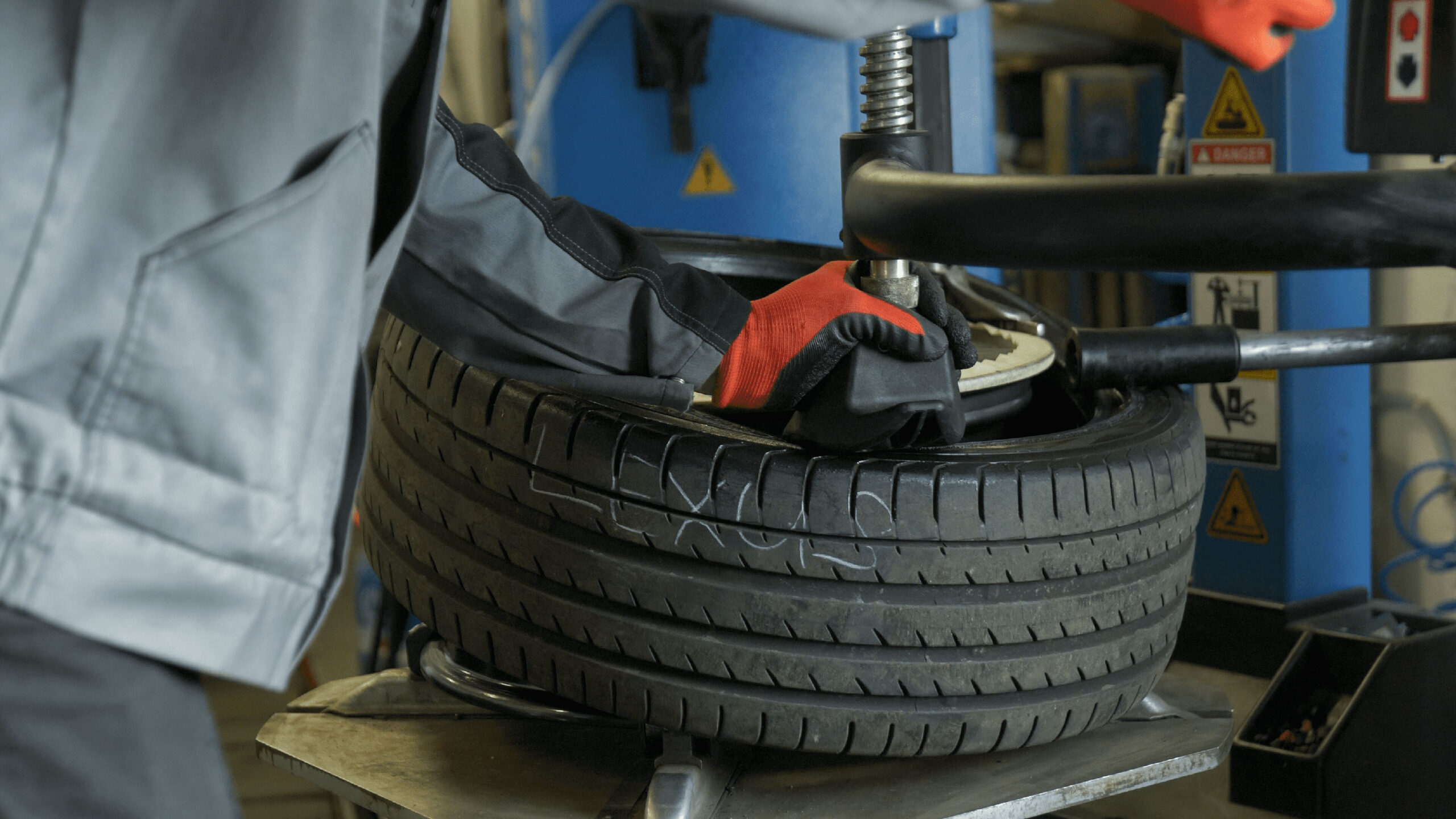
When removing and fitting tires, it is very important to use tire machines equipped with wheel protection systems.
Using metal levers or unsuitable clamps may cause:
- scratches to the paint or polished surface,
- deformation of the wheel edge,
- microcracks on the rim lip.
Some tire services still use outdated mounting machines that do not have force sensors.
Too much force during tire removal can damage the aluminum structure in thin lip areas, especially on low-profile wheels.
Tip:
Always ask whether the service uses touchless machines or plastic-covered clamps that protect the wheel from scratches.
At FelgiLab Warsaw, all work is carried out exclusively on equipment designed for alloy wheels.
Neglecting Wheel Balancing
Failure to properly balance wheels after changing tires is another common mistake.
An unbalanced wheel:
- causes steering wheel vibrations above 100 km/h,
- increases wear on bearings, suspension parts, and tires,
- may lead to wheel cracking in the most heavily loaded areas.
Balancing is not only about comfort — it is essential for even force distribution across the wheel.
Modern balancing machines can detect even microscopic differences, which is why after every tire change it is worth requesting precise computer balancing.
Using the Wrong Tire Size
Sometimes drivers choose tires with a slightly different profile, width, or diameter than the one recommended by the manufacturer.
This is a common mistake that can lead to:
- wheel deformation during driving,
- air leaks between the tire and the rim edge,
- faster tread wear,
- incorrect speedometer readings.
Tire choice must always comply with the vehicle manufacturer’s homologation.
Driving on tires that are too narrow for the wheel width is especially risky — in such cases, the rim edge remains unprotected and is much more vulnerable to scratches.
Tip:
Before buying new tires, carefully check the specifications in your vehicle manual or ask FelgiLab specialists for advice — we will recommend the best solution for safety and wheel durability.
Incorrect Bolt Tightening After Tire Replacement
When fitting wheels, it is not enough to use only a pneumatic wrench.
Bolts should first be tightened lightly in a criss-cross pattern, and then a torque wrench should be used to reach the correct torque, most often 100–120 Nm.
Incorrect tightening can cause:
- bending of the mounting surfaces,
- uneven pressure on the wheel,
- looseness that leads to wheel wobble and wheel damage.
After driving 100–150 km following tire replacement, it is recommended to recheck bolt torque.
Not Cleaning the Contact Surface Between Tire and Wheel
Many mechanics skip cleaning the wheel bead seat — the area where the tire contacts the rim. Built-up dirt, old mounting paste, or corrosion can cause:
- air leaks and slow pressure loss,
- improper tire seating,
- vibrations and uneven wheel operation.
Before installing a tire, the wheel surface should be thoroughly cleaned and dried.
At professional services such as FelgiLab, we use anti-corrosion and sealing products that further extend wheel life.
Changing Seasonal Tires at the Wrong Time
A common mistake is delaying seasonal tire changes.
High temperatures damage winter tires, while winter frost hardens summer tires. Both situations lead to:
- excessive vibrations,
- microcracks in the rubber,
- greater stress on the wheels and shock absorbers.
It is recommended to change tires at around +7°C, when the rubber compound maintains its proper properties and the wheels are not exposed to additional strain.
How to Avoid Mistakes When Using Wheels and Tires
Most wheel damage and tire problems can easily be avoided by following a few simple rules. Regular checks, proper cleaning products, and careful driving can save hundreds of złoty every year and significantly improve safety.
Below, we present practical tips based on the experience of FelgiLab Warsaw specialists.
Check Tire Pressure and Wheel Condition Regularly
This is a basic but often neglected preventive step.
- Check tire pressure every two weeks and before every longer trip.
- Maintain pressure according to the manufacturer’s recommendations, usually 2.2–2.5 bar.
- Remember that pressure that is too low increases fuel consumption and the risk of wheel damage.
If you notice air loss or uneven tire wear, it is a sign that wheel geometry and wheel sealing should be checked.
Avoid Impacts and Sudden Speed Changes
Alloy wheels, although durable, are still vulnerable to mechanical damage.
Try to:
- slow down before speed bumps and uneven surfaces,
- avoid driving onto curbs,
- park in a way that minimizes the risk of contact between the wheel and the sidewalk edge.
Every strong impact can lead to microcracks that later cause deformation or air leaks.
Clean Wheels and Tires Regularly
Systematic cleaning is not only about appearance, but also about protection against corrosion and paint degradation.
- Wash wheels every 2–3 weeks using mild pH-neutral products.
- Avoid acid-based cleaners or strong solvents.
- After washing, apply a protective layer such as wax or sealant to reduce dirt and brake dust buildup.
Pro tip: Powder-coated wheels, such as those refurbished at FelgiLab, are especially resistant to chemicals, but they still require regular care.
Change Tires Seasonally and Store Them Properly
Many drivers underestimate the importance of correct tire storage.
Improper storage conditions can lead to tire deformation, which in turn negatively affects the wheels.
Proper storage rules:
- store tires in a dry, cool place,
- protect them from direct sunlight,
- do not stack tires one on top of another unless they are mounted on wheels — in that case, store them horizontally,
- clean and dry them thoroughly before storage.
This helps prevent rubber cracking and wheel corrosion.
Check Wheel Balancing and Alignment
Even well-maintained wheels can become damaged if the wheels are poorly balanced.
Steering wheel vibration, the car pulling to one side, or rapid tread wear are all signs that alignment should be checked.
It is worth doing such an inspection:
- after every seasonal tire change,
- after hitting a large pothole,
- after suspension or steering repairs.
At FelgiLab, we also offer wheel diagnostics and lateral runout inspection, which allows us to detect deformation that is invisible to the naked eye.
Do Not Delay Wheel Repairs
Minor scratches and chips are not just a visual issue.
These are places where corrosion begins — at first unnoticed, later leading to paint peeling and coating failure.
Early action means lower costs and longer wheel life.
At our FelgiLab Warsaw workshop, we offer:
- blasting and powder coating,
- wheel welding and straightening,
- CNC diamond cutting of wheel faces for a perfect look and precise finish.
Use Professional Services
DIY wheel repair attempts often make the situation worse.
Improper tools, lack of knowledge about aluminum structure, or cheap paints can cause permanent damage.
A professional workshop such as FelgiLab.pl has:
- wheel straightening and CNC machines,
- powder coating booths,
- experience working with wheels from brands such as BMW, Audi, Mercedes, Tesla, and others.
Instead of buying new wheels, send yours for refurbishment.
It is a cheaper, faster, and more environmentally friendly solution.
Questions
Frequently Asked Questions About Wheel and Tire Use
Should minor scratches on a wheel be repaired?
Yes. Even small scratches or paint chips may eventually lead to corrosion. Water, salt, and dirt get under the coating and cause it to peel. At FelgiLab, we remove such damage through blasting and powder coating, restoring the original appearance and durability of the wheel.
How often should alloy wheels be cleaned?
It is recommended to clean them every 2–3 weeks, and even more often in winter. Road salt and slush are among the biggest enemies of aluminum. After washing, it is worth protecting the wheels with synthetic wax or a ceramic coating to reduce dirt adhesion.
Is refurbishment safe for alloy wheels?
Yes, as long as it is carried out by a professional workshop. At FelgiLab, we use low-temperature processes and CNC machining that do not damage the aluminum structure. Every wheel is checked for airtightness and tested for balance after refurbishment, which makes it fully safe for further use.
How long does professional wheel refurbishment take?
The standard turnaround time is 4–10 working days, depending on the extent of damage and the selected finish. In the case of premium wheels or special colors such as shadow chrome or piano black, the service time may be slightly longer. Every FelgiLab customer receives a 12-month warranty.
Is refurbishment worth it instead of buying new wheels?
Definitely. Buying a new set of wheels can cost from PLN 2,000 to PLN 6,000 or more, while refurbishing one wheel costs from around PLN 200–400. The final visual effect is comparable to new wheels — and often even better, because you can choose a custom color or finish.
Refurbishment Is Enough — No Need to Buy New Wheels
Wheels are the signature of a car and one of the key safety elements.
Proper use and regular maintenance help avoid most of the problems discussed in this article.
However, if your wheels are already scratched, bent, or corroded — you do not need to buy new ones.
Professional refurbishment at FelgiLab Warsaw is enough.
Thanks to modern technology, we:
- restore the original shape and shine of wheels,
- apply durable paint coatings with resistance of up to 5 years,
- offer a 12-month warranty,
- complete most jobs within 4–10 days,
- provide the option to leave your car with us during the repair.
Book a Free Wheel Refurbishment Quote
Do not risk driving on damaged wheels. Leave your details or call +48 514 716 916, and the FelgiLab specialists will prepare an individual quote and completion date for you.
Contact us
Have a question or want to get a quote? Fill out the form and we’ll get back to you as soon as possible.